


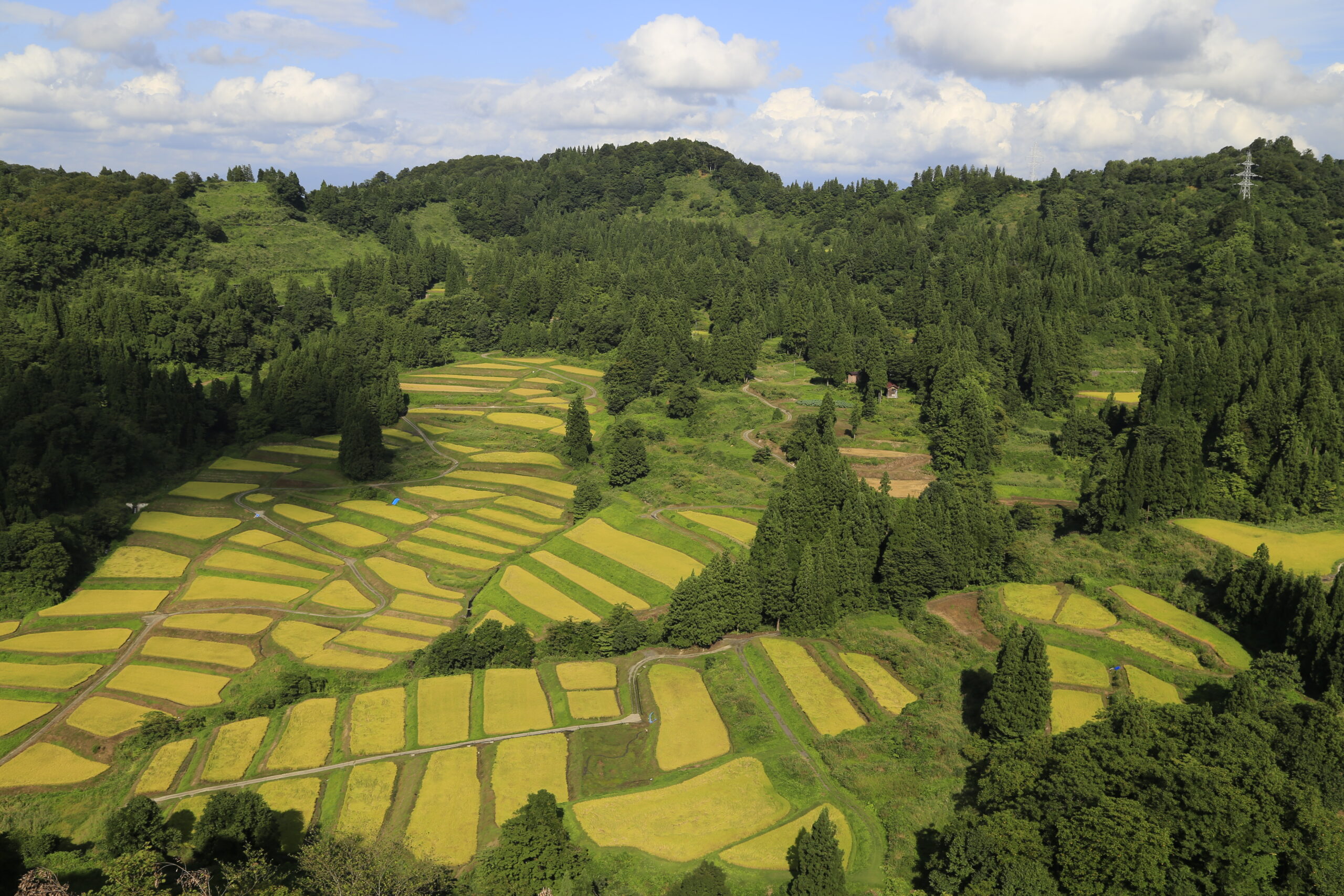
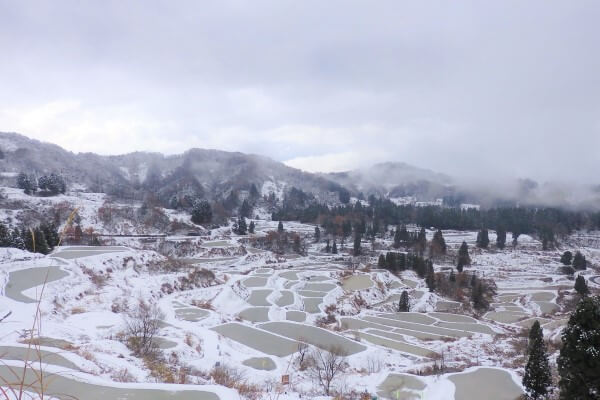
| Winter | A pure-white blanket of snow is cast over Hoshitoge. However, the rice terraces will be very difficult to access because snow plows do not clear the roads. |
| Spring | The fields are filled with water and appear as mirrors that reflect the sky above (This is the most popular season for photography). Late May to June |
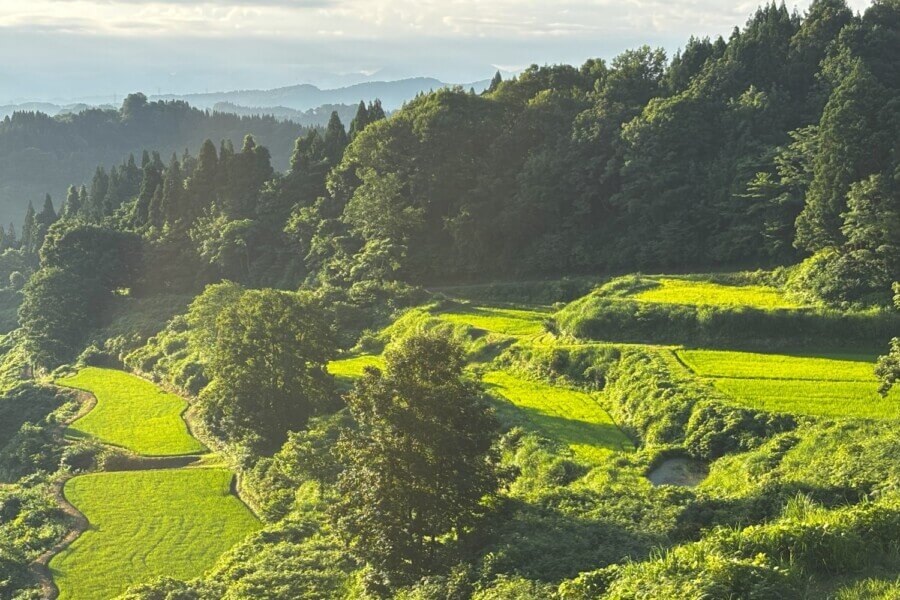
| Summer | The whole landscape turns shades of bright green, and a sea of clouds drifts into the valley in the morning. Around September |
| Autumn | See the terraces surrounded by fall colors and filled with water. Around November |
*The timing of these seasons may vary slightly each year.
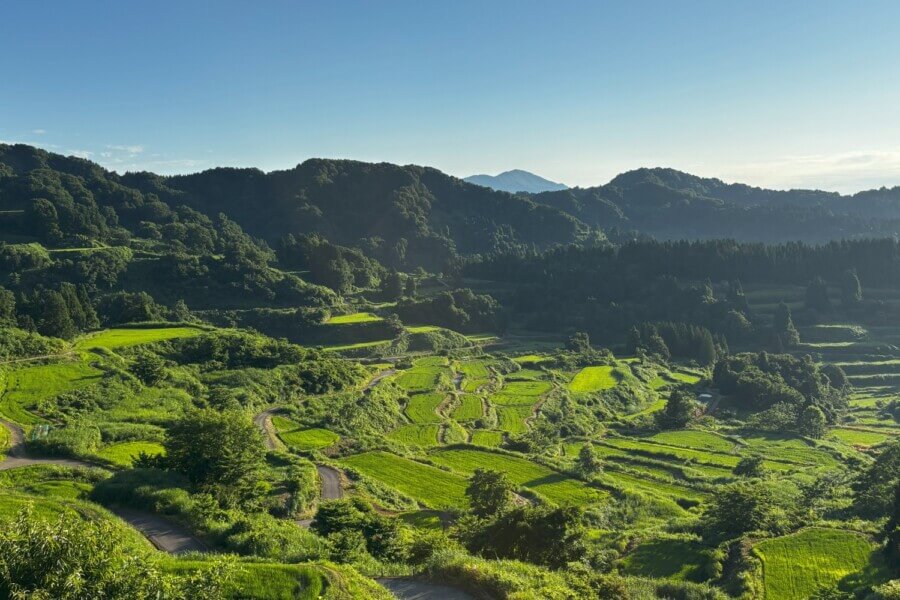
Hoshitoge Rice Terraces
Tanada (rice terraces) are rice fields that line the mountain slopes like steps in a staircase. The tanada found resting high and low in the mountains of the Matsuno-yama and Matsudai areas of Tokamachi City are some of the most impressive in all of Japan. Their appearance transitions with the seasons, producing vibrantly different expressions as the year progresses. In spring and autumn, each field shines like a mirror as it reflects the setting sun – and in the winter, a snowy blanket is cast across the landscape, creating a serene, white winterscape. Tokamachi’s Hoshitoge Rice Terraces in particular attracts thousands of photographers and tourists throughout the year; they are truly a sight to be seen!
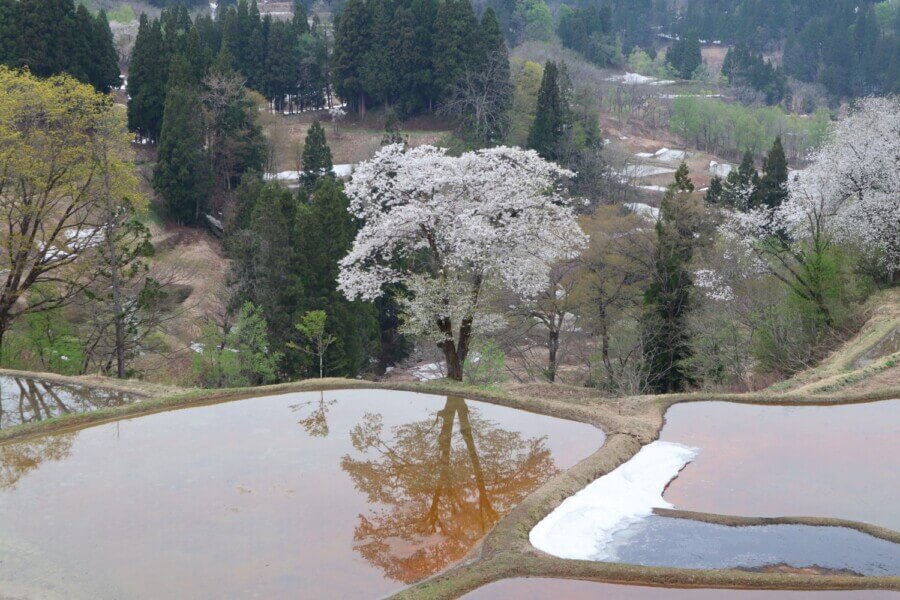
Gimyo Rice Terraces
The Gimyo Rice Terraces are a small set of fields located near the Matsudai Castle Ruins. If you’re a fan of sakura (cherry blossoms), this is the best place to visit during spring as the fully-bloomed petals are beautifully reflected in the ponds of the terraces!
Some of the best views are in early-mid spring, when there is still a bit of snow paired with the sakura trees, and in autumn, when the gorgeous fall colors are in full display with just a hint of fallen snow to accentuate their beauty.
Located along National Route 253, please take great care as traffic volumes are high.
※ Sakura season is typically at the end of April to the beginning of May (around Golden Week).
※ The rice terraces can be crowded during sakura season. Please be respectful of other visitors when looking for parking, and please only park in the designated areas to not risk any accidents. Please exercise caution when entering back into the highway.
Kamo Rice Terraces
The Kamo Rice Terraces, nestled in the mountains of Matsudai, provide a breathtaking view from the beginning of spring, when the snow is melting, all the way to the first snows of winter. This is a popular spot for photographers and artists looking to capture their perfect moment in nature.
The terraces beautifully reflect the morning sun in their pools of water, and if you are lucky you can see morning mist roll off the ponds. They give a different expression depending on the time of day, the season, and weather.
Take a look at the huts scattered throughout the distance and imagine for a moment what it must be like to live among such beautiful scenery. The face of Mount Kamoshiroyama can be seen in the distance, and on a clear day you may be able to see Mount Echigo and Mount Makihata.
The first snow of the year in December at Kamo is truly a one-of-a-kind experience. Even in the middle of winter all you’ll need to do is take a short walk on the snow to be able to see these beautiful terraces. (Please make sure you have winter tires on your car.)
※ The snow can pile up over 2 meters in the winter so please bring appropriate footwear.
※ We cannot ensure your safety during winter. Please take extra precautions if you must visit.
Notes for taking pictures:
We kindly ask for your understanding and cooperation with the following:
- Please do not leave any garbage behind.
- Please be considerate of other drivers when you park your car; do not block the passage of other vehicles.
- Please refrain from entering the rice fields when taking photographs. Also, please watch your step when walking on old footpaths as they may collapse.
- Please refrain from picking any wild plants, cultivated vegetables, wild grass, or flowers.
- Please be friendly to local residents. Feel free to say hello and ask for directions if you get lost.
Tokamachi’s beautiful nature belongs to us all. Thank you for observing these good manners.