


芸術祭の人気スポットを厳選紹介。はじめての方にも役立つ完全ガイド!
Highlights of the Echigo-Tsumari Art Field
Surround Yourself in a World of Art.
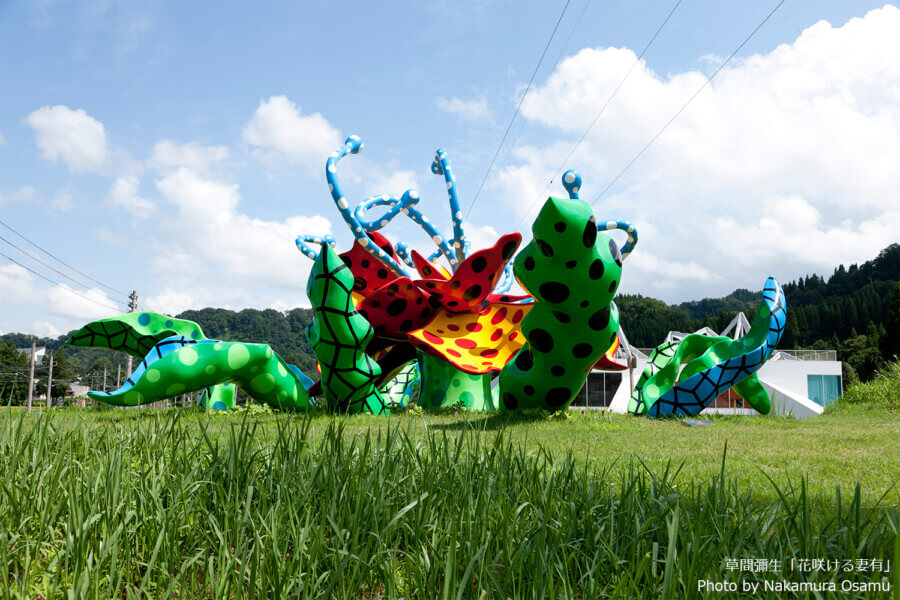
What is the Echigo-Tsumari Art Field?
Tokamachi and the nearby Tsunan town are host to the Echigo-Tsumari Art Field, which is one of the largest art festivals in the world as well as the pioneer of regional art festivals taking place across Japan.
Using the gorgeous natural landscape as a backdrop for the field art installations, this art festival celebrates nature and art as one.
In addition to the permanent art collections, seasonal exhibitions, events and guided tours are organized throughout the year, while some of the artworks and closed schools are open as restaurants, cafes and accommodations.
The Echigo-Tsumari Art Field Videos
Introduction
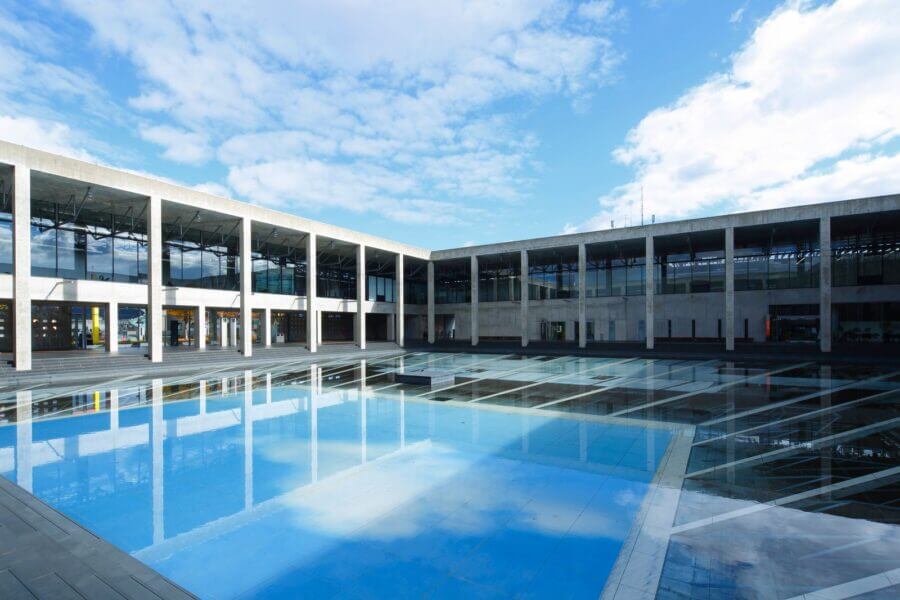
Museum on Echigo-Tsumari (MonET)
The Museum on Echigo-Tsumari, or MonET (pronounced mone-ay like the artist) for short, is considered the starting point for the Echigo-Tsumari Art Field. From the moment you step in you will find yourself surrounded by art. In fact, the shallow pool of water found in the center of the museum court is an artwork in itself, and the open corridors that surround it are the setting for seasonal exhibitions. This contemporary art museum hosts a permanent exhibition of many iconic Echigo-Tsumari artworks on its second floor and includes a café and a gift shop dedicated. Plus, you may get to see a live radio broadcast during your visit, because the headquarters of FM Tokamachi are located in MonET.
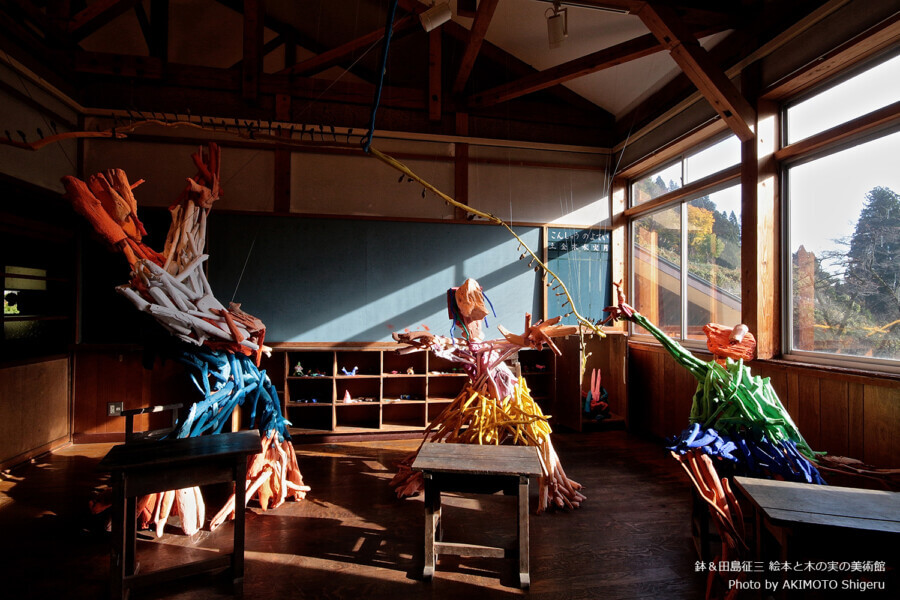
Hachi & Seizo Tashima Museum of Picture Book Art
This former elementary school is located in Hachi, a village surrounded by mountains. Seizo Tashima, a picture book artist, transformed this closed school after its closure into a small museum. He created a story to accompany his new museum called “The School Will Never Become Empty,” featuring the last three students attending this school called Yuki, Yuta, and Kenta. Seizo Tashima even imagined monsters living in the closed school. Visitors can experience the story for themselves as they explore the space of this walk-in picture book museum. We encourage you to come and meet the three last students as well as the monsters living in the school including Toperatoto, the laughter-eating monster, and Doradoraban, the dream destroyer.
Museum closed during winter (from the end of Nov. to end of Apr.).
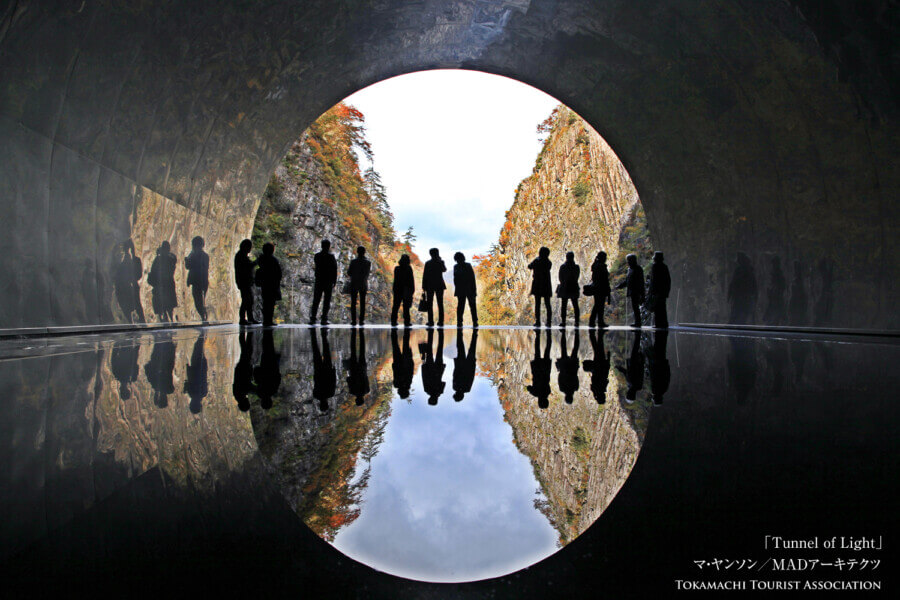
Tunnel of Light (Kiyotsu Gorge Tunnel)
As part of the 2018 program, MAD Architects was invited to revitalize the Kiyotsu Gorge Tunnel – a pre-existing 750-meter passageway that cuts through distinctive rock formations, offering panoramic views over one of Japan’s three great chasms. Drawing on the ‘five elements’ of nature (wood, earth, metal, fire, water), MAD’s scheme transforms key locations along the tunnel through the creation of several architectural spaces and artistic atmospheres. The designs rethink the relationship between humans and space, and seek to re-connect locals and visitors alike with the majestic beauty of the nature.
Please note: Advance booking required for visits on selected days.
Please visit their official website for more information.
Matsudai NOHBUTAI Field Museum
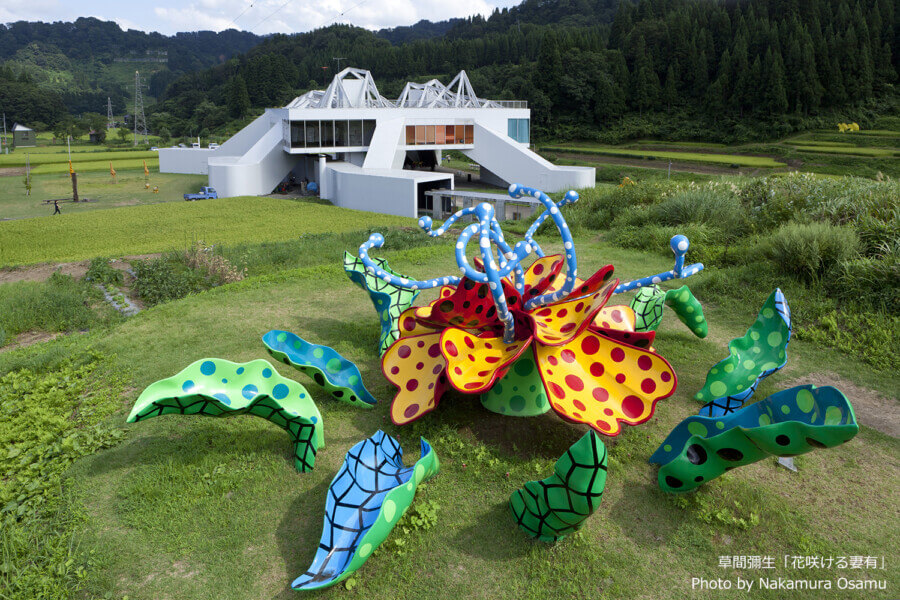
Next to Matsudai station is one of the main gates to areas of the Echigo-Tsumari Art Field known as the Matsudai NOHBUTAI Field Museum Joyama Art Complex, which features many recommended artworks scattered on the mountain side near the Nohbutai Center building. You will find numerous installations created by world-renowned artists on the road way up to the Matsudai Castle Ruins. These artworks are blended into the rich nature of this area, allowing the visitor to feel all four seasons of the area with their entire being. This is the epitome of the Art Field, whose concept is “human beings are part of nature.” This area can be visited in half a day or be enjoyed in the course of a full day.
Dine Inside Art
Echigo-Matsudai Satoyama Shokudo
You can find this restaurant inside the Nohbutai Center, just near Matsudai station.
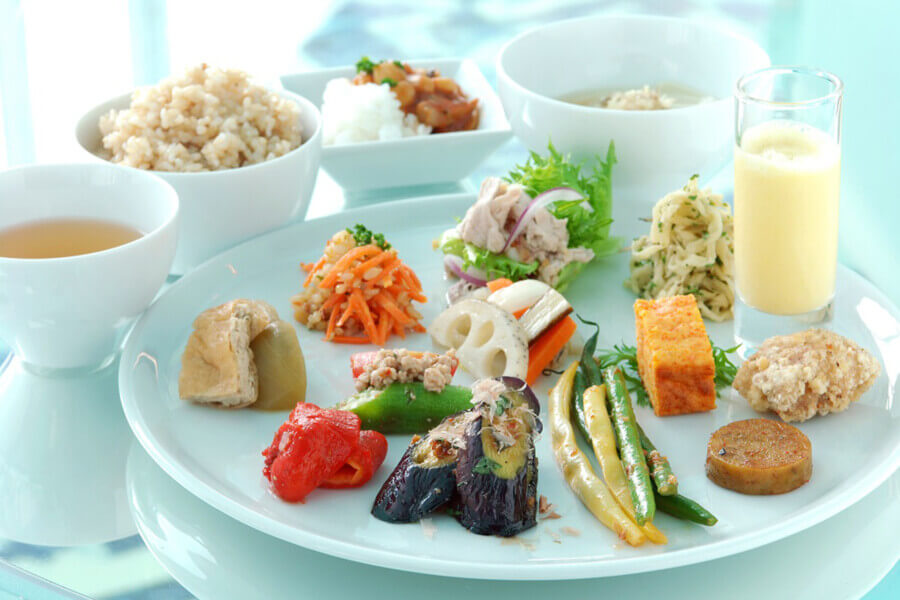
Its floor-to-ceiling windows give you a panoramic view of the terraced rice fields. The unique light blue interior is an artwork-space itself is created by Jean-Luc Vilmouth: photographs taken by local residents are hung on the ceiling and reflected on the round table surfaces, giving you the feeling of being embraced by the nature of Matsudai.
The menu features typical Matsudai dishes prepared with locally grown ingredients and wild mountain vegetables, known as sansai in Japanese.
Come to enjoy the view of Matsudai nature while savouring its natural gifts!
1-900x600.jpg)
Hachi Café
Located in the Museum of Picture Book Art, you can find this charming café in the nostalgic atmosphere of one of the classrooms of this repurposed former school . All the ingredients used are locally-grown and served in delicious dishes and desserts .
The menu is inspired by Seizo Tashima’s picture book artwork, making customers feel almost as if they are a character in one of his stories displayed in this museum.
Sleep in Artwork!
Many of the art pieces in the Echigo-Tsumari Art Field double as lodgings. If you find that just a day trip isn’t enough, why not stay the night?
House of Light by James Turrell
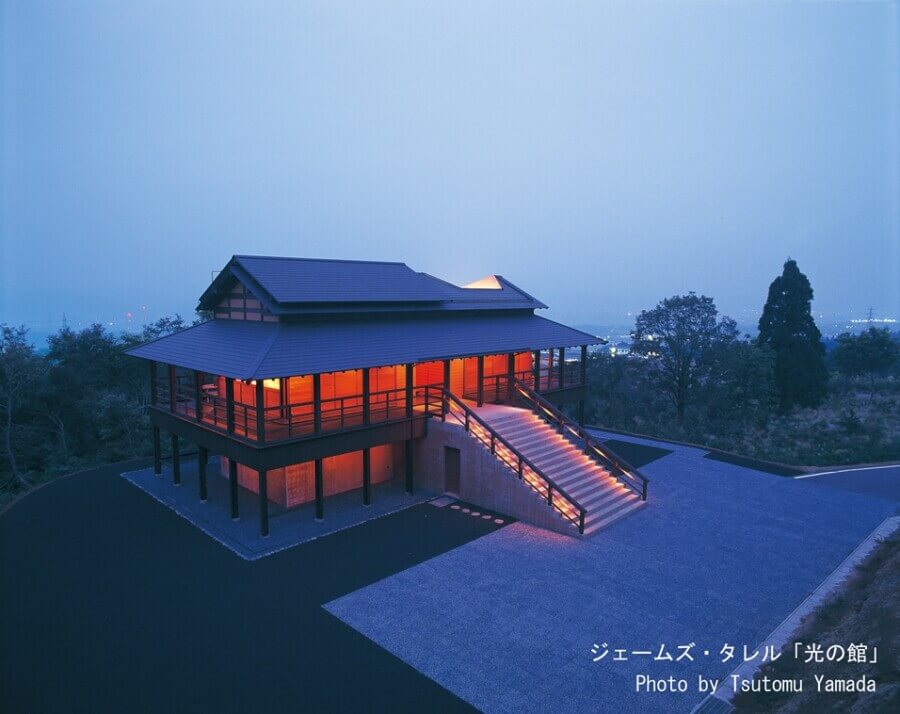
This beautiful work of art was designed by James Turrell, an American artist famed for his interpretation and manipulation of light as an art medium. The main room of House of Light includes a sliding roof panel that opens to reveal the gorgeous sky above. The room itself can change color to match the sky and create a beautiful room of light. Day visits are of course welcome, but there are also plans for those wishing to stay overnight. Please book in advance as this is an incredibly popular artwork!
Katakuri House
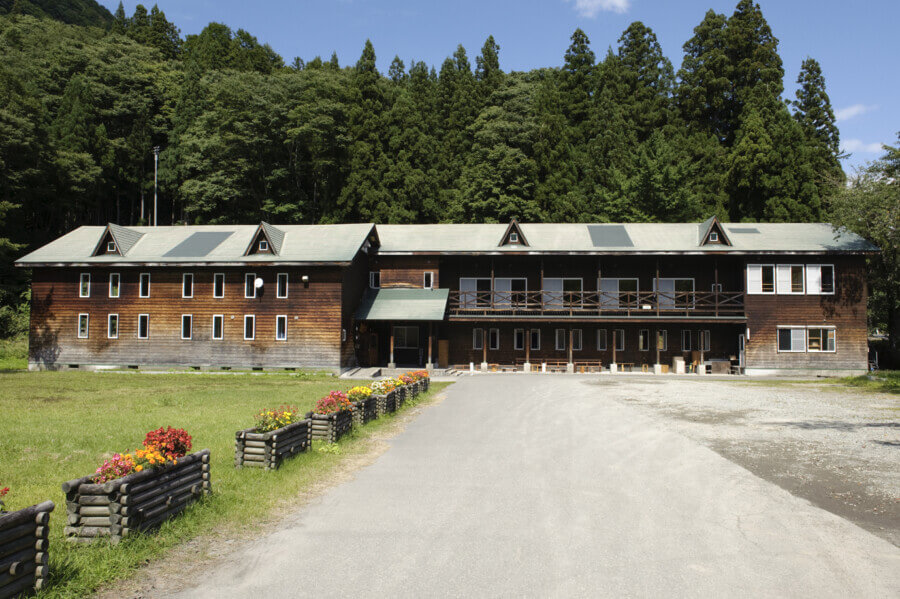
Enclosed by scenic mountains there are twelve small hamlets, collectively known as Akiyamago, with a former school built in the 19th century which have been the heart of this community for 108 years until its closure in 1992.
This old school has been renovated and given a new life as an accommodation so it could keep supporting the community with a new purpose, accommodating all those visitors eager to discover this delightful area, its abundant nature and the art it hosts.
Katakuri house is looking forward to welcoming visitors with its comfortable rooms and delicious local food.
Photo Hiroshi Noguchi